Cell Therapy Production Scale-Up
Conventional manual laboratory methods used for cell therapy development are not readily scaled for commercial production.
Commercial success of a cell therapy requires a significant number of patients to be treated. Scaling up a manual laboratory scale process would require a large number of clean rooms and an even larger number of trained personnel to work the rooms. Even if the clean rooms were built and the staff hired and trained, maintaining the level of consistency and quality to satisfy the regulatory requirements and process demands would be challenging.
Example of a typical autologous cell therapy based on scale-up of manual laboratory scale processes.
There is a dramatic change in the manufacturing requirements as you progress through clinical trials and into commercial production.

A paradigm shift in thinking is required to enable the commercial scale production of cell therapies.
Cell Therapy Automation Within 'Closed' Consumables
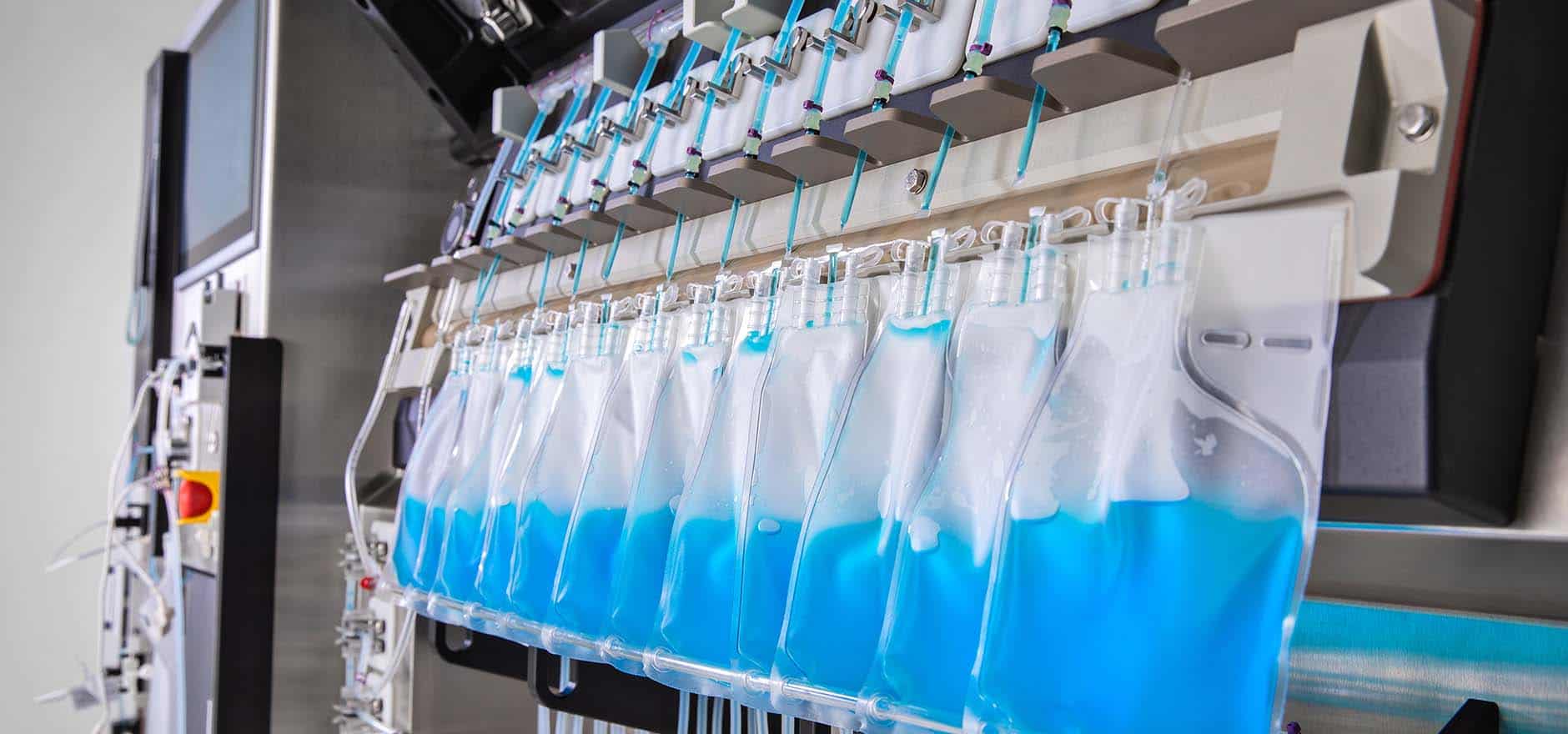
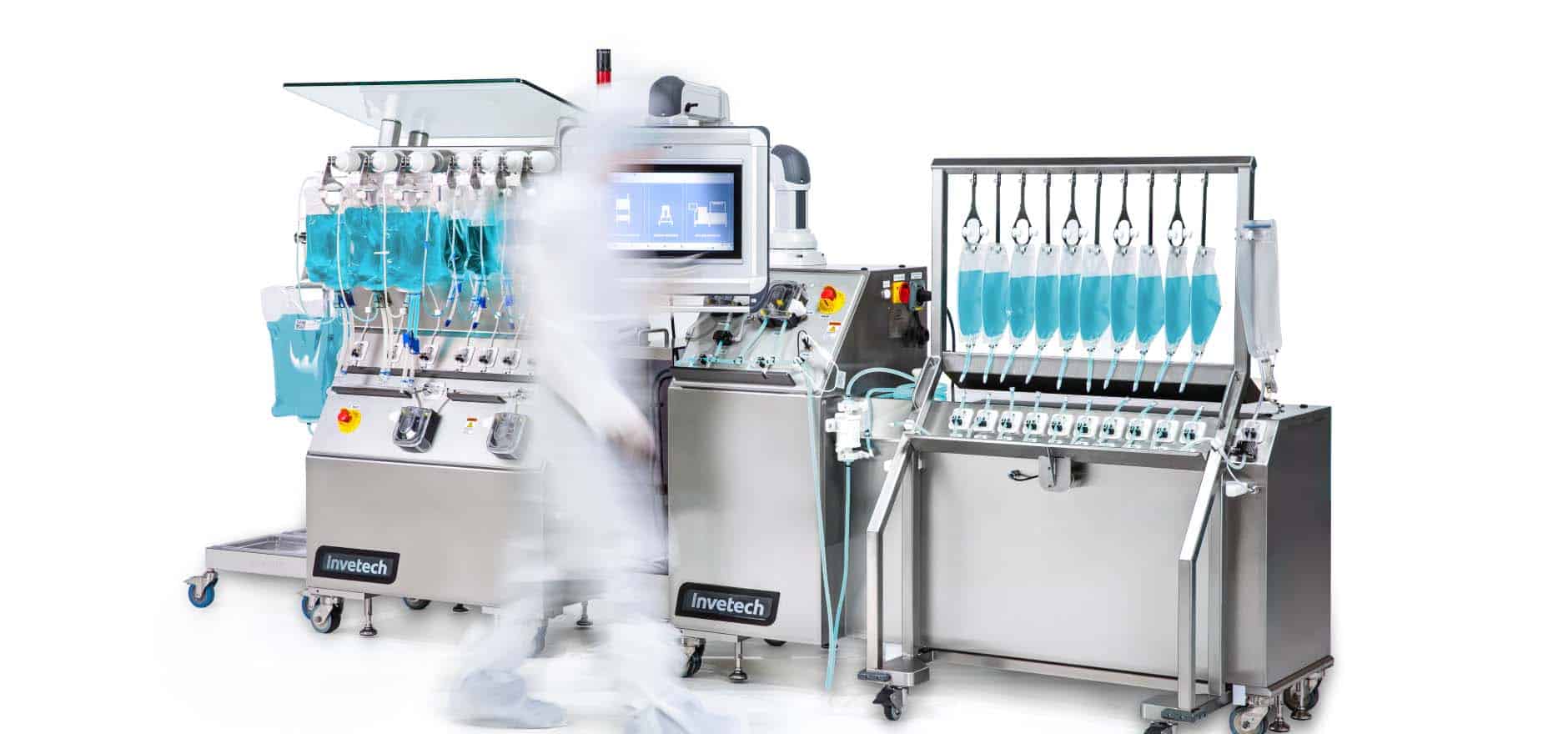
A 'closed', automated and integrated solution requires cell therapy processes including centrifugation, incubation, media addition, cell selection, cell washing and final fill and finish, to be performed within a 'closed' consumable. A machine is used to automate the processes and replicate many of the qualitatively controlled manual processes. The machine also provides consistent and operator-independent quality.
Whereas conventional 'open' processing would require a separate clean room for each batch, in automated 'closed' processing the machines used to automate production can be placed side-by-side in a processing room with each machine processing a different batch.
The benefits of automated processing include:
- Improved process integrity and quality with a reduction in the number of quality events.
- Significant reduction in the cost of therapy.
- Significant reduction in the number of operators required.
- Reduced dependence on skilled labor.
- Significant reduction in capital investment through better facility utilization.
- Ability to more rapidly scale-up and scale-out to match demand.
Achieving Commercial Scale Cell Therapy Production within a Budget
Whilst the benefits of developing a closed, automated and integrated production systems are significant, funds are typically precious during early stage clinical trials. Therefore, until there is a clear indication that the therapy is safe and efficacious, and the manufacturing process reasonably mature, investment in a highly automated and fully integrated system should be kept to a minimum. However it is important to recognize that making changes to that process after completing phase 3 clinical trials can be extremely difficult and expensive and may even require additional trials.
We therefore recommend that cell therapy companies invest a relatively small amount of effort and money early in the Clinical Trial process to define the most appropriate commercial scale system and in particular the critical process technologies. Once this has been defined, a staged development and implementation strategy can be prepared to match the clinical trials schedule and availability of funding but also enable production capacity to be rapidly increased once the therapy is approved.

Examples of closed, automated Cell Therapy solutions
Invetech has worked with several companies to develop closed, automated and integrated cell therapy manufacturing systems that is enabling a step change improvement in process integrity, cost of therapy and ultimately commercial viability for this rapidly emerging market including:
Argos Therapauetics
Automated cellular and RNA processing system
An automated cellular and RNA processing system was developed to manufacture autologous immunotherapies to treat advanced kidney cancer (metastatic renal cell carcinoma), B-cell chronic lymphocytic leukemia and HIV.
At the heart of the automated process are three standalone units: an RNA processing subsystem, which processes the tumor homogenate into amplified tumor RNA, with all steps performed on a single patient sample and taking place in a closed disposable container; and two cellular units designed to perform the various cellular and plasma processing steps to generate the final product in functionally closed disposable vessels.
KBI Biopharma
kSep™ Closed Continuous Centrifuge
kSep™, a closed continuous centrifuge was developed to gently concentrate, capture and/or separate cells by providing a very low-shear and nourishing environment. kSep™ is being applied with a single-use disposable in order to take advantage of decreased cycle time, reduced validation requirements, lower processing costs and minimal risk from cross-contamination.
Applications for the kSep™ technology include cell washing, retention, concentration, harvest, dispensing and separation; perfusion; continuous flow centrifugation; and, efficient media or buffer exchange.
MolMed
Feasibility study to define an automated, closed processing system
A feasibility study was undertaken to define an automated, closed processing system for the commercial scale production of Molmed's TK Therapy. TK is an ex vivo cell therapy, enabling safe haematopoietic stem cell transplant (HSCT) from partially compatible bone marrow donors, for the treatment of haematological malignancies, particularly high-risk acute leukemia.